
Deforestation in Indonesia: What Has Happened in the Last Two Decades?
INFOGRAPHICS
2/5/2026
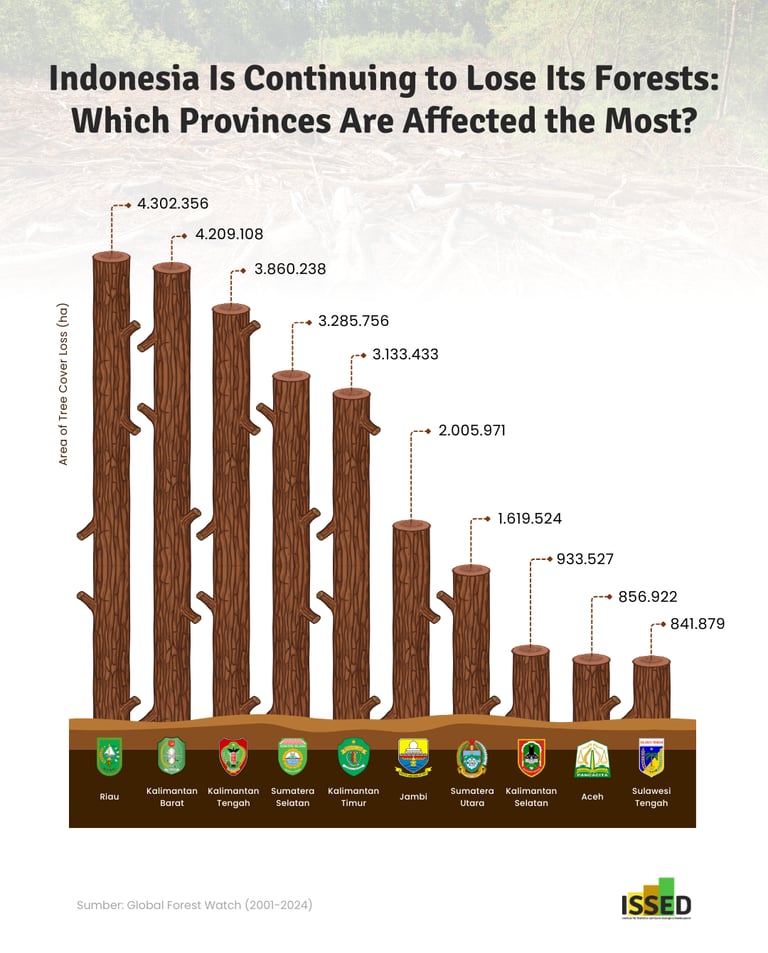
According to data from Global Forest Watch (GFW), Indonesia has lost around 20% of its total tree cover between 2001 and 2024. The highest accumulation of tree cover loss has been recorded in various provinces such as Riau, West Kalimantan, and Central Kalimantan. In fact, this region is known as the center of lowland tropical forest ecosystems that store large carbon reserves and are habitats for various endemic species.
In the long term, large-scale tree cover loss has the potential to reduce the forest's capacity as a natural carbon sink. Over time, this will increase the frequency of disasters, loss of flora and fauna diversity, reduced availability of clean water, and the emergence of various undesirable events.
Indonesia is one of the countries with the largest tropical forest areas in the world, after Brazil and Congo. These forests serve as natural carbon sinks, climate buffers, and sources of livelihood for millions of people who depend on them. However, over the past two decades, tree cover degradation in Indonesia has continued unabated.